The work changed. The pattern stayed the same.
I did not move through a neat sequence of job titles. Each stage added another way of looking at the same question: how do you turn an unclear need into something that actually works?
- 01STAGE 01
MAKING THINGS
Turning what I learned into things people could actually use.
- 02STAGE 02
DESIGN / UIUX
Learning to think beyond visuals — into flows, states and user journeys.
- 03STAGE 03
WEB / SEARCH
Understanding intent, structure, discoverability and measurable outcomes.
- 04STAGE 04
B2B MARKETING
Working with longer buying journeys, business context and multiple stakeholders.
- 05STAGE 05
OPERATIONS
Seeing the dependencies behind execution — people, budget, vendors, approvals and ownership.
- 06STAGE 06
SYSTEMS / AI
Turning repeatable knowledge and workflows into systems that can execute part of the work.
- 0101
MAKING THINGS
Turning what I learned into things people could actually use.
- 0202
DESIGN / UIUX
Learning to think beyond visuals — into flows, states and user journeys.
- 0303
WEB / SEARCH
Understanding intent, structure, discoverability and measurable outcomes.
- 0404
B2B MARKETING
Working with longer buying journeys, business context and multiple stakeholders.
- 0505
OPERATIONS
Seeing the dependencies behind execution — people, budget, vendors, approvals and ownership.
- 0606
SYSTEMS / AI
Turning repeatable knowledge and workflows into systems that can execute part of the work.
- 01PHASE 01
MAKING THINGS
Turning what I learned into things people could actually use.
- 02PHASE 02
DESIGN / UIUX
Learning to think beyond visuals — into flows, states and user journeys.
- 03PHASE 03
WEB / SEARCH
Understanding intent, structure, discoverability and measurable outcomes.
- 04PHASE 04
B2B MARKETING
Working with longer buying journeys, business context and multiple stakeholders.
- 05PHASE 05
OPERATIONS
Seeing the dependencies behind execution — people, budget, vendors, approvals and ownership.
- 06PHASE 06
SYSTEMS / AI
Turning repeatable knowledge and workflows into systems that can execute part of the work.
I didn’t become a UI/UX designer. But UX stayed with me.
There was a period when I seriously considered moving into UI/UX as a profession.
I applied for internships, took freelance design work and spent more time building product flows instead of only visual assets.
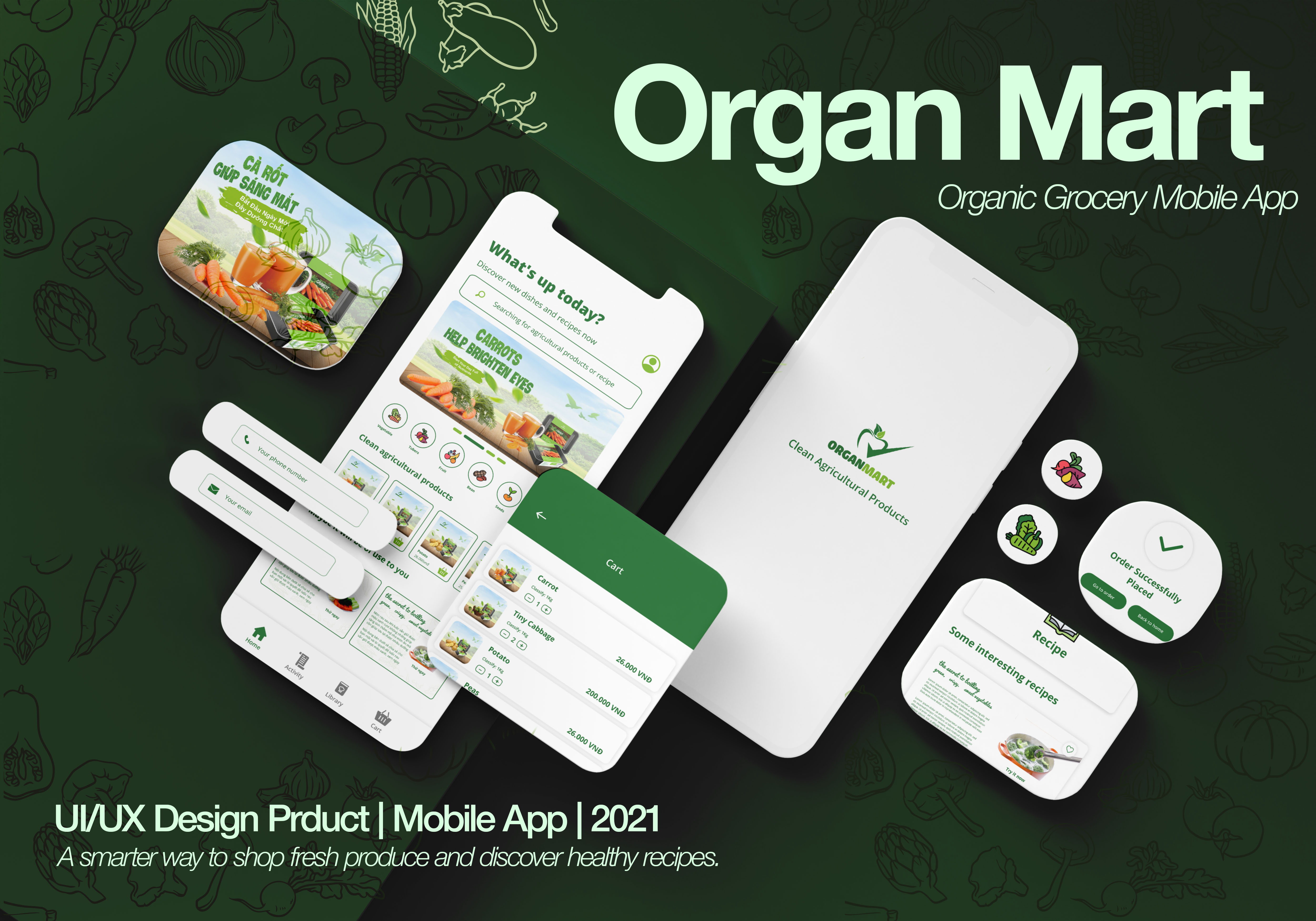
Organ Mart became the first UI/UX project I packaged end to end — from branding and user flows to components, wireframes and interface design. Sài Gòn Cafe pushed that thinking further with multiple journeys and operational states across delivery, pickup, table booking, loyalty, tracking and account flows.
I eventually stayed in marketing. But UX changed the way I looked at the work around it.
Websites stopped being collections of pages. Content stopped being isolated pieces. Conversion stopped being a button at the end of a landing page.
I started looking at all of them as journeys — shaped by what someone needs, what they see next, where friction appears, and what has to happen behind the interface for the experience to actually work.
“Good design is less about screens and more about how people move through a system.”
ORGAN MART
First fully packaged UI/UX project
SÀI GÒN CAFÉ
First complex multi-flow product UX project

Design taught me how people move through an experience.
Search taught me how they find that experience in the first place.
Search taught me to think about intent, structure and measurable outcomes.
Web and SEO were not capabilities I added recently.
During my time at TPCOMS, I was already working across SEO planning, websites, service interfaces, webinar landing pages, responsive implementation and website administration.
Search added another layer to the way I thought about digital work.
UX asks whether people can move through an experience clearly. Search asks whether the right people can discover it in the first place — and whether the structure, language and performance behind it actually match what they are looking for.
I spent time on both sides of SEO: content, site structure and search intent, but also ranking mechanics, on-page, off-page, entities and distribution. I do not treat the more ranking-oriented part of that period as my identity today, but it gave me a useful understanding of how visibility is actually built.
How the pieces connect.
Marketing creates value when content, user experience, automation, data, and systems reinforce one another.
Translates business positioning and technical facts into clear, authoritative material that answers high-intent buyer questions.
Ensures that when buyers arrive, navigation is intuitive, content layout is readable, and key actions have zero friction.
Removes repetitive manual overhead across drafting, validation, and publishing so execution remains steady without burning out teams.
Uses organic search queries, web telemetry, and workflow metrics to inform what needs improvement rather than relying on guesswork.
Establishes shared editorial taxonomies, verification checkpoints, and clear ownership so marketing output compounds over time.
What I’m focused on now.
Real projects and operational responsibilities that define my day-to-day practice across enterprise marketing and independent systems.
B2B Marketing & Operations at SV Telecom
Leading digital marketing operations, website infrastructure governance, technical SEO architecture, and editorial workflows for telecom enterprise solutions.
AI Content Tool
Building and maintaining an independent content system that unifies context grounding, AI-assisted drafting, human editorial review, and SEO tracking into a single deterministic workflow.
Content Operations & Modular Trees
Developing and testing modular Content Trees—anchoring brand and product facts into canonical source records that branch predictably into multiple publication formats.
AI & Automation Experiments
Testing real-world applications of LLMs and script automations in marketing workflows, maintaining human judgment in the loop, and documenting lessons publicly.
Continuous learning, applied to real work.
Selected certifications that strengthen the foundations behind my work across marketing, UX, data, AI and systems.

Foundations of Digital Marketing and E-commerce
Google UX Design Professional Certificate
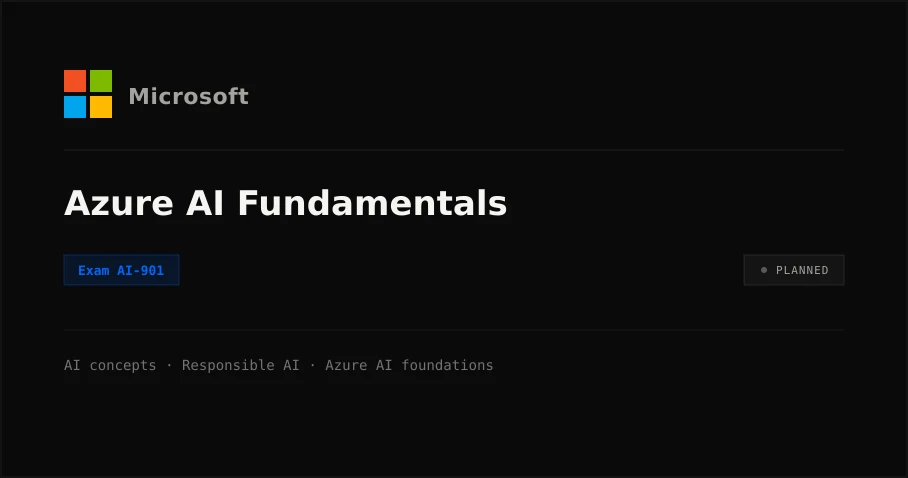
Microsoft Certified: Azure AI Fundamentals
AB-900
AB-900
PL-300
PL-300
How I like to work, learn and build.
Principles that guide how I collaborate, test ideas, and evaluate whether a system is genuinely working.
Start with the real problem, not the tool
Tools, automations, and code only matter after the business friction or workflow bottleneck is precisely understood. I prefer defining constraints and measurable objectives before selecting software or writing pipelines.
Document decisions and build in public
Sharing experiments, architecture notes, and operational hurdles openly creates intellectual discipline. Putting work in public tests ideas against reality and turns daily lessons into compound knowledge.
Value durability over short-term hype
Whether designing an SEO taxonomy, organizing an editorial calendar, or building an automated pipeline, I prioritize systems that remain maintainable, clear, and useful six months after deployment.
Continue through the site.
Explore active client records, independent software tools, or read ongoing Build in Public notes.
Enterprise marketing operations at SV Telecom and selected commercial engagements.
AI Content Tool, independent digital products, software tools, and creative systems.
Build in Public notes, editorial state machines, and real-world AI automation experiments.